Circular economy
At Colas, every deconstruction site is a source of raw materials. Thanks to our integrated industrial model—production, works, and services—we master the entire chain, from deconstruction to reuse.
Our teams transform site waste into locally recovered resources, following a logic of concrete and measurable circular economy.
Our integrated circularity model
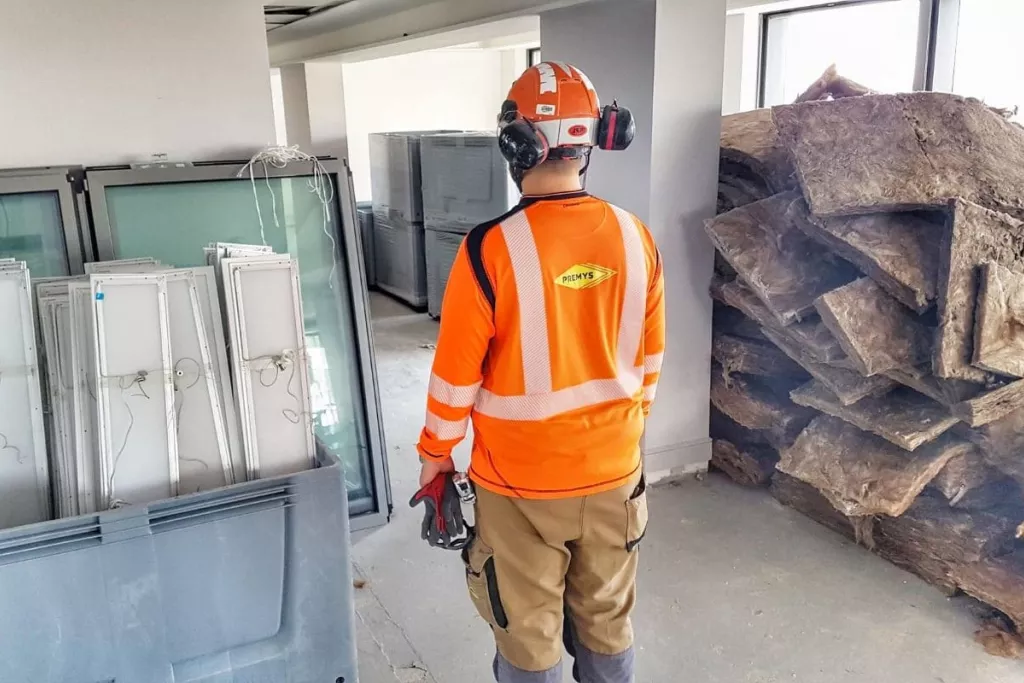
A long-standing player in the circular economy, Premys, the deconstruction brand of the Colas group, recovers and recycles materials and waste from construction sites.
As a major player in prevention, on-site sorting, and recycling, Premys contributes to reducing the environmental impact of the building sector and preserving natural resources. Its teams offer concrete solutions to reduce the carbon footprint of projects by maximizing the reuse and repurposing of resources derived from deconstruction:
Recycling and material recovery
Our recovery platforms treat each stream in an optimized manner to maximize recovery and minimize environmental impact. Their role: to give a second life to materials from deconstruction sites.
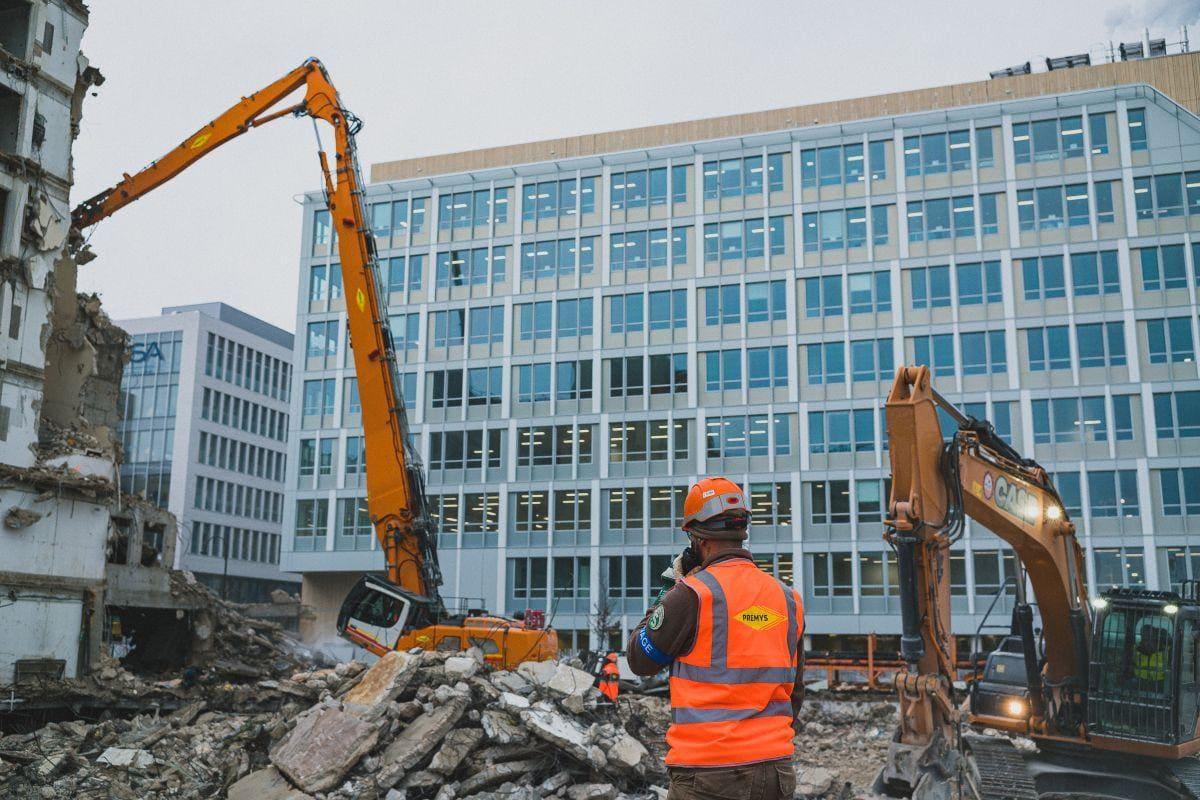
- Sorting, screening, and quality analysis to guarantee the performance and compliance of recycled materials.
- Local recycling: reuse of materials on nearby construction sites.
- Full traceability and digital documentation ensured at every stage.
- Measurable reduction in CO_2 thanks to short circuits and optimized logistics.
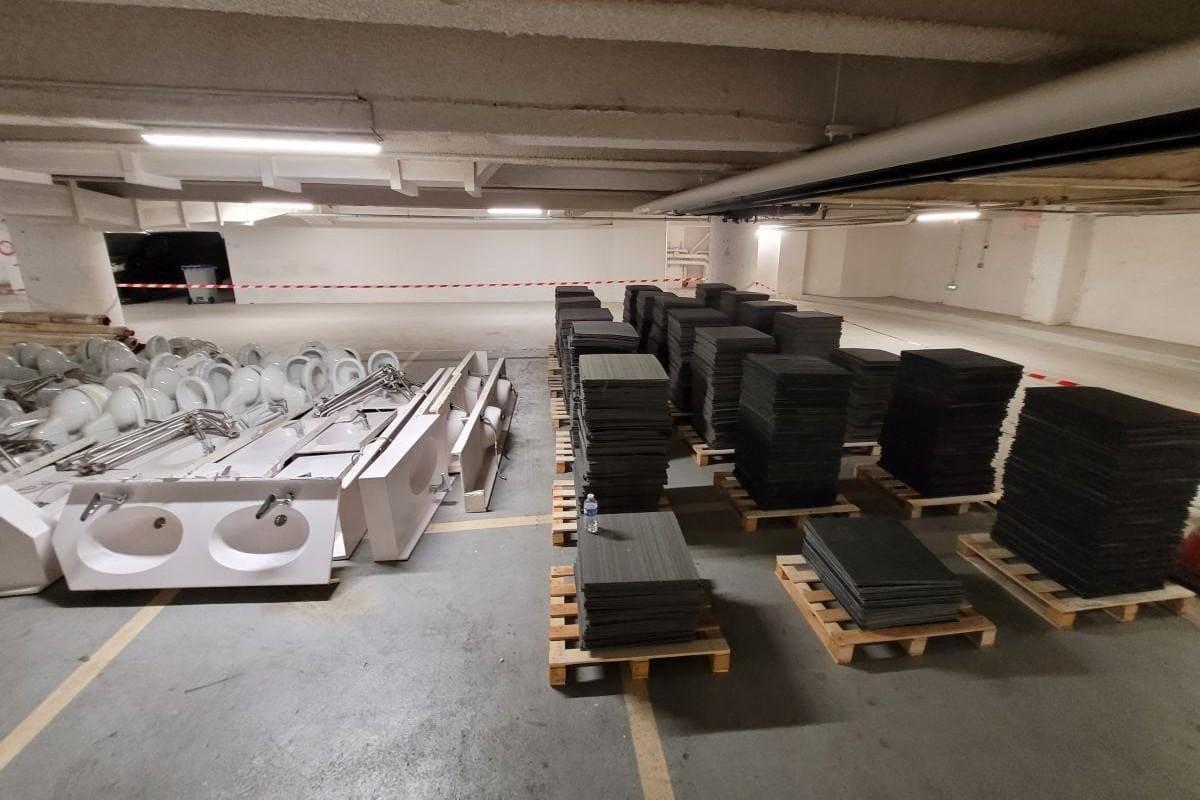
Reuse and circular engineering
Circular economy is not limited to recycling: it relies on genuine reuse engineering. Colas develops this approach by drawing on structuring partnerships and dedicated digital tools.
- Resource diagnosis before each project to identify reusable materials.
- In situ reuse and integration of reuse from the project design stage.
- Partnership with Cyneo: together, we structure local reuse sectors and support the skills development of industry players.
- MATRYS, our digital tool for managing reuse, centralizes diagnoses, tracks material flows, and measures environmental gains (reused tonnages, avoided $CO_2$).
Objective: to industrialize reuse through data, collaboration, and engineering.
Enhanced quality & traceability
Circular economy is not limited to recycling: it relies on genuine reuse engineering. Colas develops this approach by drawing on structuring partnerships and dedicated digital tools.
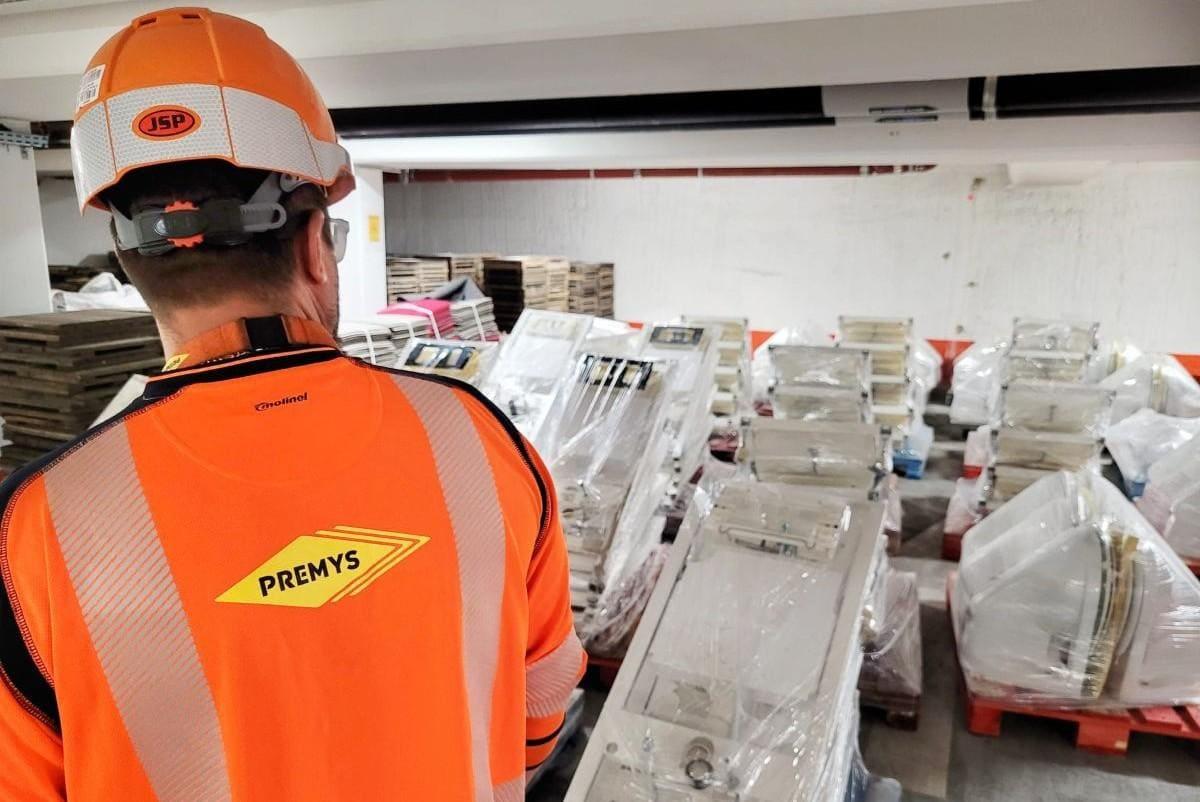
- Rigorous process: weighing, sorting, screening, analyses, complete documentation.
- Integrated digital tracking via MATRYS and our environmental reporting tools.
- Certification and total traceability of secondary raw materials.
- Guarantee of performance and compliance with current standards.
Proximity & optimized logistics
Colas' territorial network constitutes an essential lever for reducing travel distances and optimizing all flows related to deconstruction. By relying on a network of Valormat platforms, located as close as possible to construction sites, Colas facilitates the management of excavated materials, the circulation of materials, and the pooling of resources.
This proximity notably allows for the efficient deployment of the double-freight principle, through which trucks drop off materials from construction sites before leaving loaded with recycled materials, thus limiting empty trips. Transport organization is designed to control costs, reduce emissions, and strengthen overall environmental performance. Finally, this approach relies on close territorial partnerships with local authorities and companies, which help to anchor the circular economy in the daily practices of deconstruction projects.
Quelques chiffres clés
Quelques chiffres clés
Frequently questions
Reuse consists of using a material or construction element as is, without transformation. Repurposing involves minor refurbishing or minimal treatment to allow for a new use, while maintaining the product's original function. Recycling, for its part, transforms the material into a new secondary raw material, ready to be integrated into new structures. All three approaches contribute to waste reduction and the preservation of resources.
Colas relies on a rigorous control process at every stage, from material characterization to implementation. The Valormat or Ecotri platforms perform regular analyses, verify compliance with current standards, and ensure complete traceability through MATRYS, the digital flow-tracking system. This approach guarantees reliable, high-performance recycled materials adapted to the requirements of deconstruction and reconstruction sites.
These practices significantly reduce material transport, limit the volume of waste sent to traditional channels, and decrease CO² emissions associated with the production of virgin raw materials. Every ton reused or recycled contributes to preserving natural resources, optimizing the carbon footprint of construction sites, and supporting the transition toward a more sustainable and circular construction model.
Waste is sorted directly on-site or at our specialized platforms to separate reusable, repurposable, or recyclable materials. This sorting at the source increases recovery rates, reduces unnecessary transport, and directs each material toward the most appropriate channel, in compliance with current regulations.
Tell us about your project
Do you want to integrate the circular economy into your deconstruction or rehabilitation project?
Colas supports you in benefiting from our expertise in recovery, reuse, and sustainable engineering, backed by MATRYS and our partnership with Cyneo.