Shared mobility
Urban mobility is evolving. To address safety, inclusion, and ecological transition challenges, shared mobility is becoming a priority for territories.
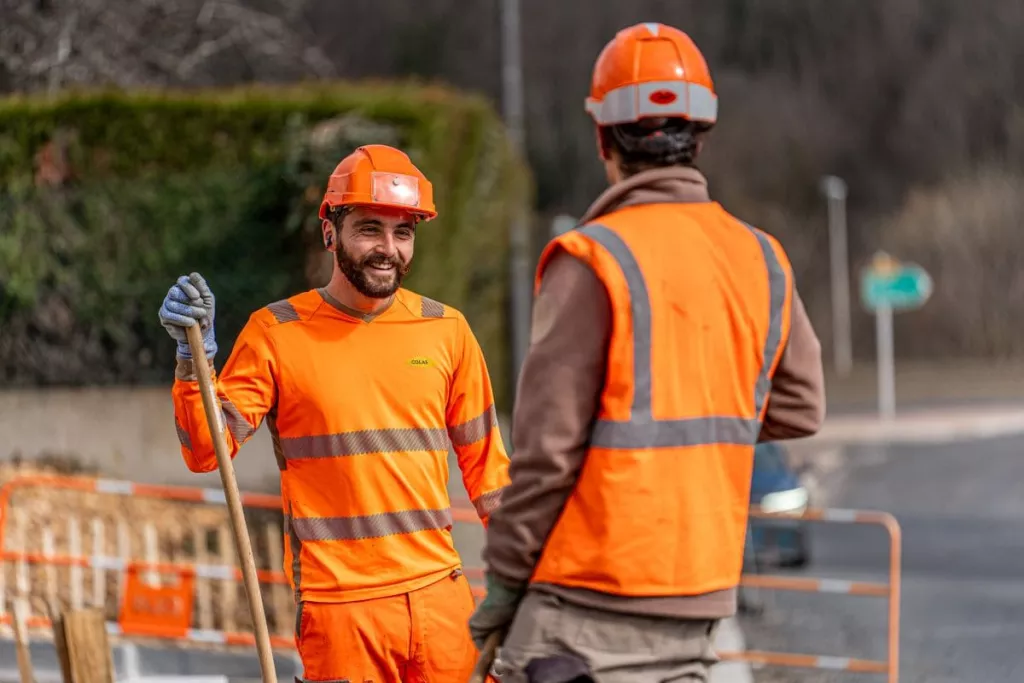
Colas supports local authorities and planners in the planning, design, and construction of sustainable infrastructure that promotes active mobility (cycling, walking) and collective transport (BRT, tramways).
Our vision: connecting uses and calming public spaces
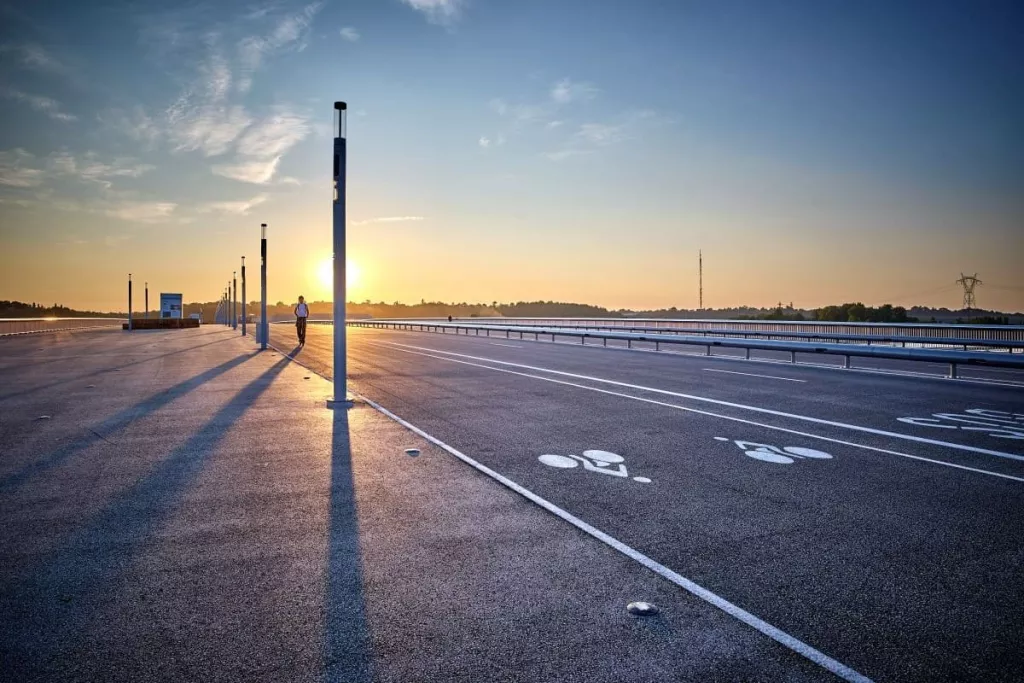
Every shared mobility project carried out by Colas is built around four key pillars that guide the design of solutions tailored to the needs of each territory. Accessibility ensures safe and inclusive journeys for all users, including those with reduced mobility. Safety focuses on creating spaces where cyclists, pedestrians, and public transport coexist without risk, promoting smoother movement. Sustainability is achieved through reduced CO₂ emissions, the use of recycled materials, and permeable pavements for better stormwater management. Finally, performance measures the tangible benefits of the developments, such as usage, comfort, and safety.
By combining engineering, innovation, and co-creation with local stakeholders, Colas helps communities build cities that are more sustainable, inclusive, and fluid.
Active mobility: from network to infrastructure
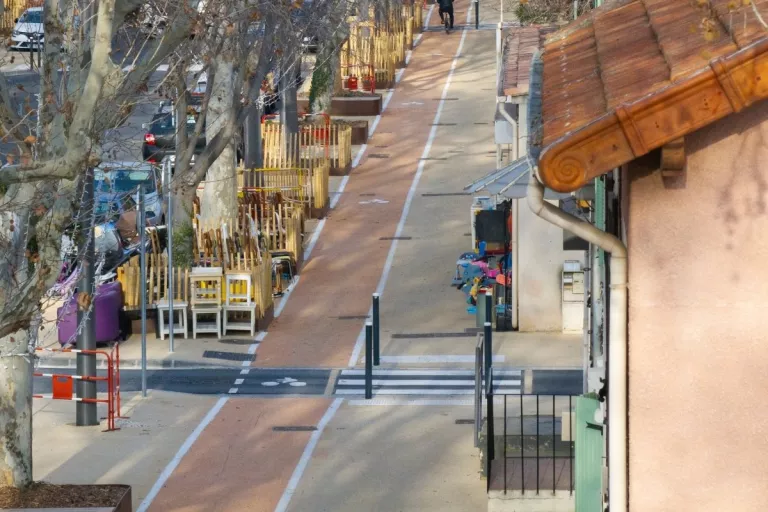
Cycle lanes and paths: continuity and safety
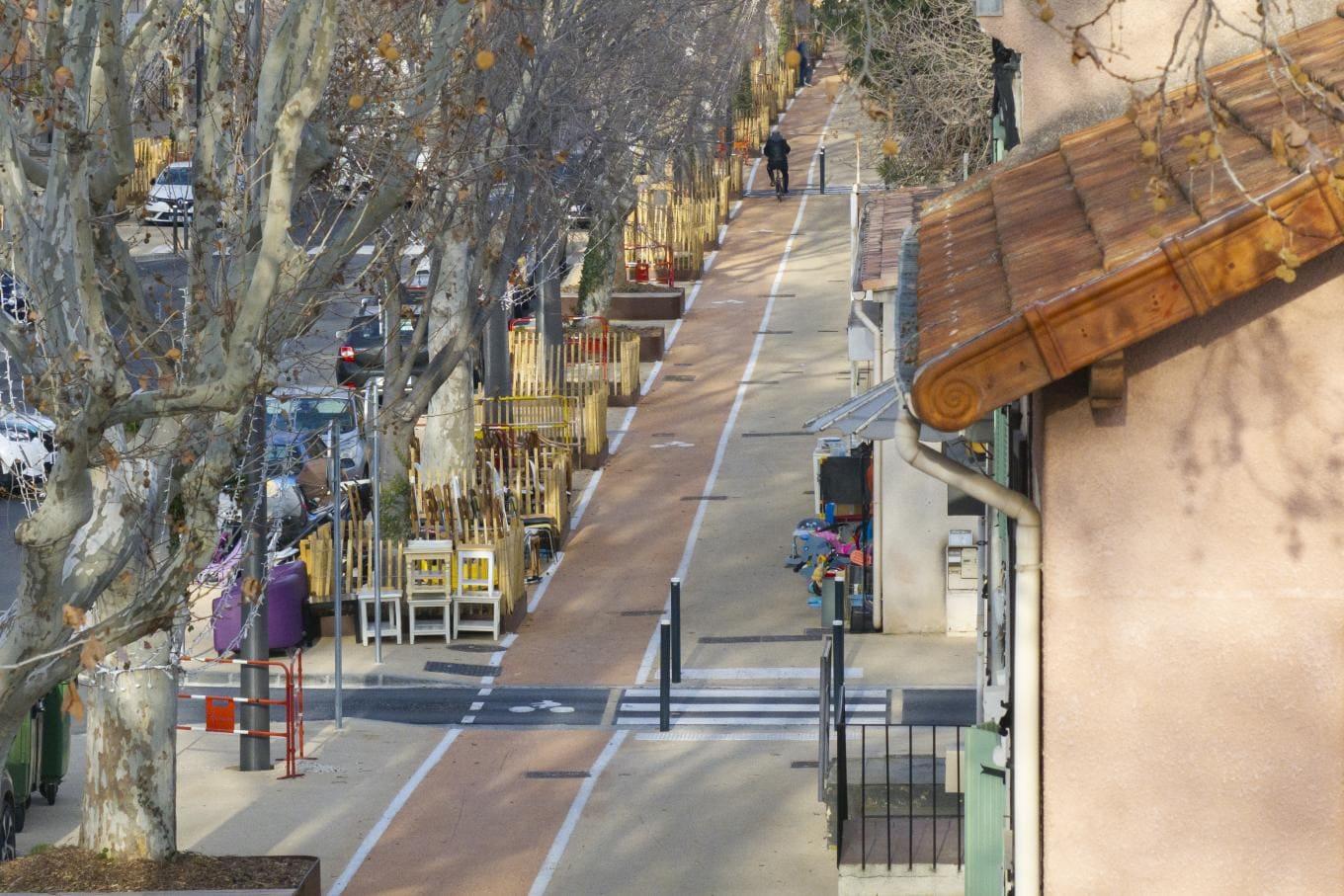
Colas designs and builds complete cycling networks, adapted to each urban or suburban context: one-way lanes, two-way lanes, or shared paths.
Our priorities include:
- Safe continuity at intersections
- Comfortable and durable pavements (Urbalith, Vegecol, Colclair),
- Bicycle parking areas and charging stations
Objective: to encourage cycling, reduce car congestion, and improve air quality.
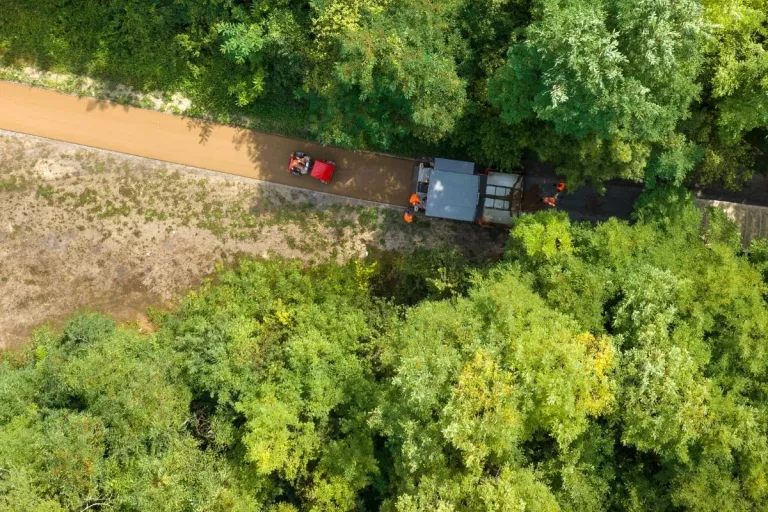
Greenways & soft routes: connecting territories
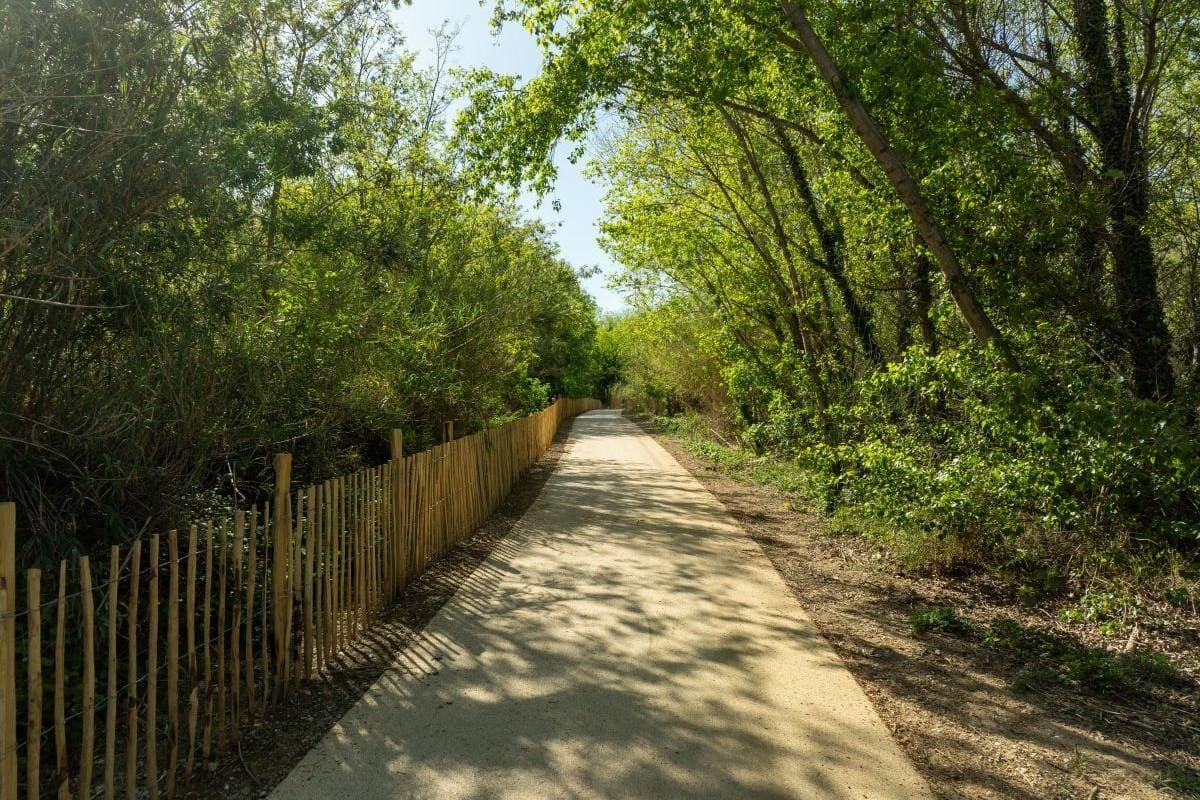
Greenways and soft routes link urban centers to natural and tourist areas. Colas integrates:
- Greening and soil permeabilization using innovative pavements like Vegecol,
- Permeable surfaces that promote stormwater infiltration, with solutions such as Urbalith,
- Clear signage for all users.
These developments support low-carbon mobility and enhance the attractiveness of territories.
Pedestrian zones & sidewalks: comfort and accessibility
For Colas, walking is a cornerstone of shared mobility. Our pedestrian developments enhance safety, comfort, and inclusion by providing:
- Widths and slopes compliant with accessibility standards (PMR)
- Aesthetic, non-slip pavements (Urbalith, Vegecol),
- Appropriate lighting and street furniture
- Stormwater management and landscape integration
Each space becomes a safe, welcoming, and connected place to live.
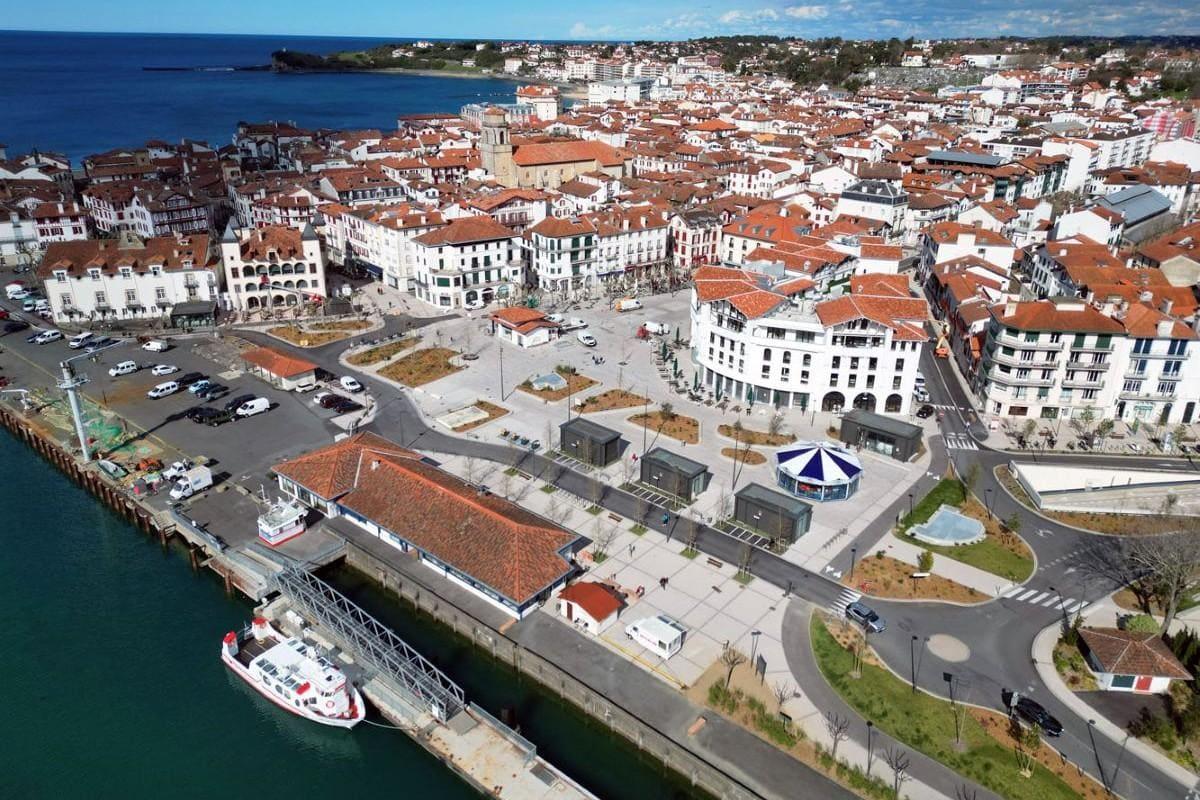
Our solutions for shared mobility
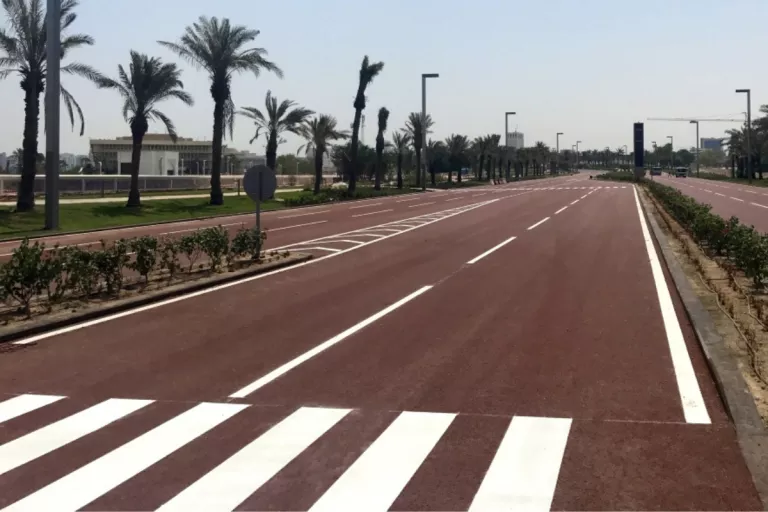
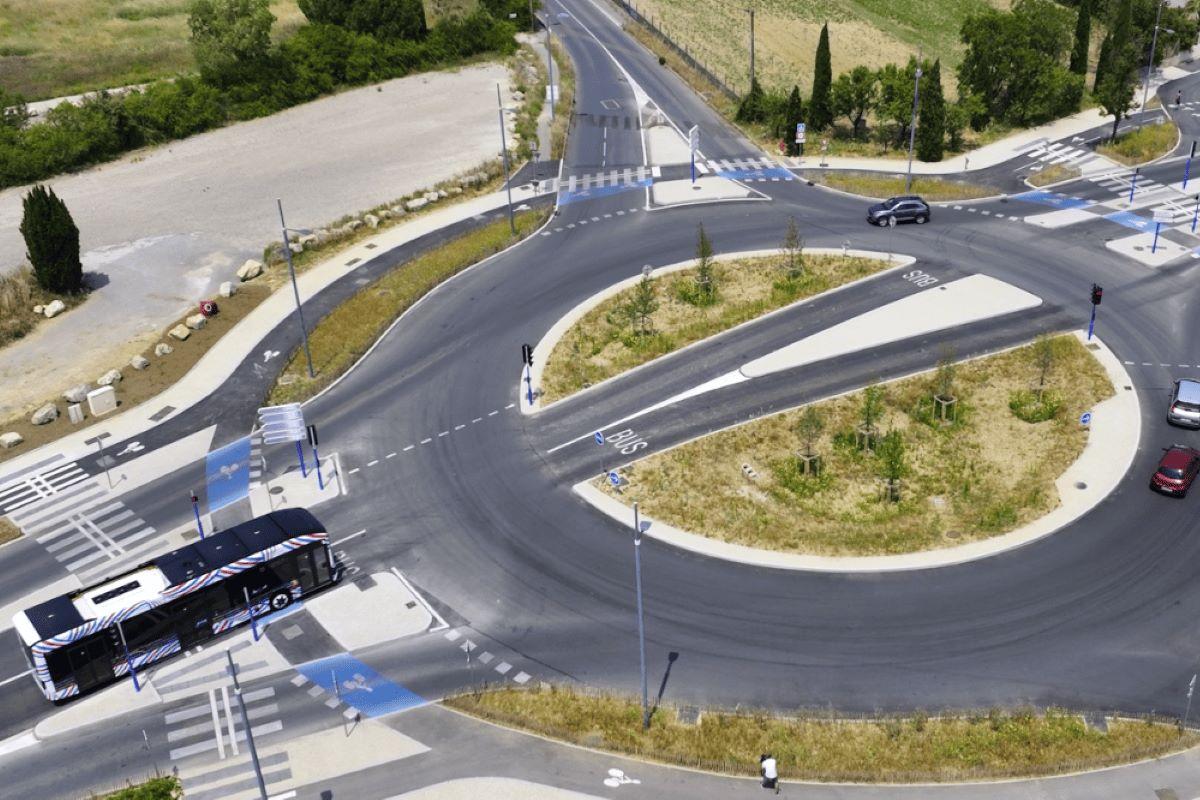
Dedicated public transport lanes (BRT/TCSP)
BRT: performance and reliability
Bus Rapid Transit (BRT) combines flexibility and speed. Colas works on:
- Designing dedicated lanes and stations
- Integrating ITS systems (passenger information, traffic signal priority)
- High-strength pavements suited for heavy traffic
Tramway: urban integration and continuity
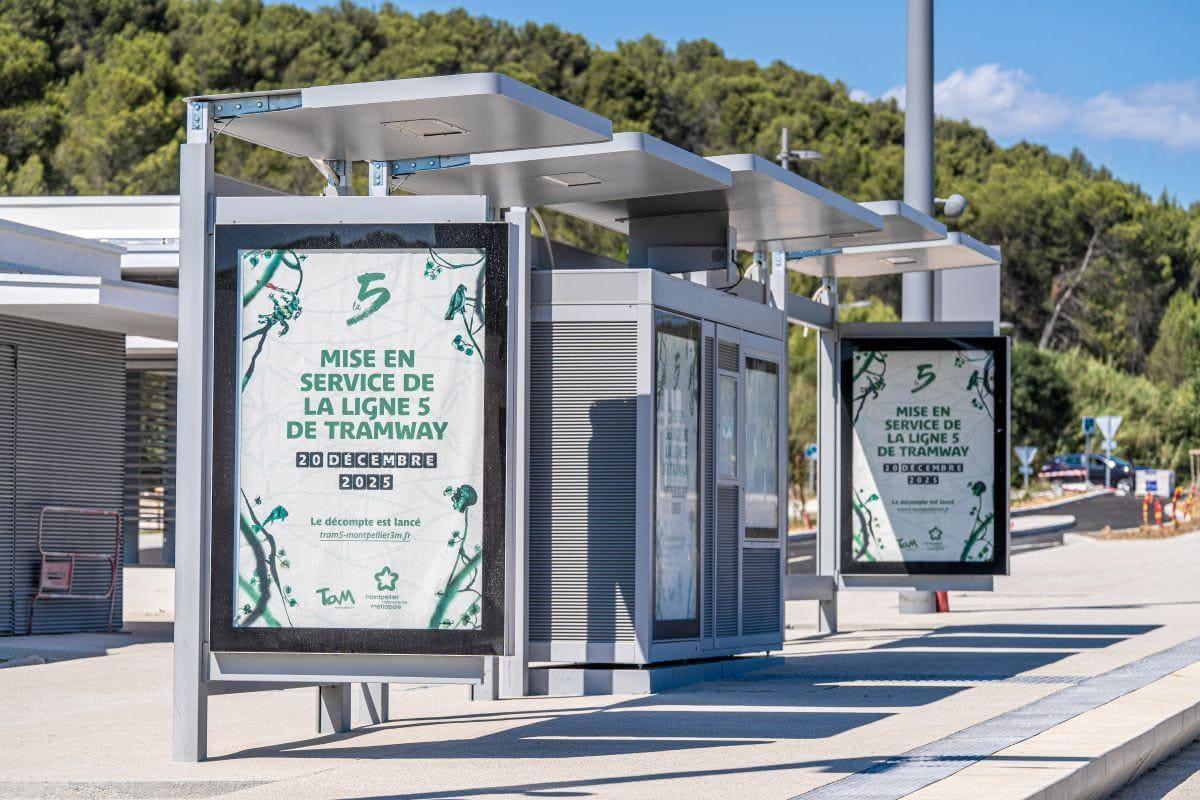
Colas manages tramway infrastructure projects from start to finish:
- Designing platforms and interchange hubs
- Ensuring harmonious urban integration
- Working on active sites while maintaining traffic flow
- Managing utilities and coordinating with public partners
Tramways provide long-term structure to territories and promote intermodality.
A 5-step approach: from assessment to performance
Frequently questions
A cycle lane is a route reserved for cyclists and physically separated from the roadway, ensuring safe travel. A cycle path, on the other hand, is marked on the road and shared with other vehicles, but clearly identified for cyclists. Finally, a greenway is fully dedicated to soft mobility—pedestrians, cyclists, rollerbladers, or scooters—often set in a landscaped environment, promoting recreational travel or safe journeys between neighborhoods.
Safety is ensured through clear signage, contrasting and non-slip pavements, and appropriately designed street furniture to guide flows. Colas also emphasizes greening and permeabilizing spaces, which help calm traffic while improving thermal and visual comfort, particularly near schools, downtown areas, and shopping districts.
A Bus Rapid Transit (BRT) is a fast, frequent, and comfortable public transport mode that operates on dedicated lanes with traffic signal priority. It combines the flexibility of a bus with the comfort of a tram, featuring specific infrastructure such as accessible stops, real-time passenger information, and digital ticketing.
Key indicators include:
- Usage rates and infrastructure occupancy
- Number of accidents prevented or reduction in accident rates
- Accessibility for people with reduced mobility (PMR)
- CO₂ emission reductions through decreased car traffic
Tell us about your project
Do you have a project for cycle lanes, BRT, or pedestrian developments?
Our experts support you from design to commissioning.