

Drinking water network: securing the supply in Gougenheim (67)

Invisible infrastructure at the heart of a reliable service
Although it often goes unnoticed in everyday life, the drinking water network plays an essential role in our daily lives. Behind every tap, complex infrastructure ensures continuous access to a vital resource.
Faced with growing challenges related to sustainable water management and securing supplies, local authorities are investing in the modernization of their networks.
It is in this context that Colas teams worked in Gougenheim (Bas-Rhin), strengthening the reliability of the water network across the Kochersberg–Souffel area.
Strengthening drinking water distribution at the inter-municipal level
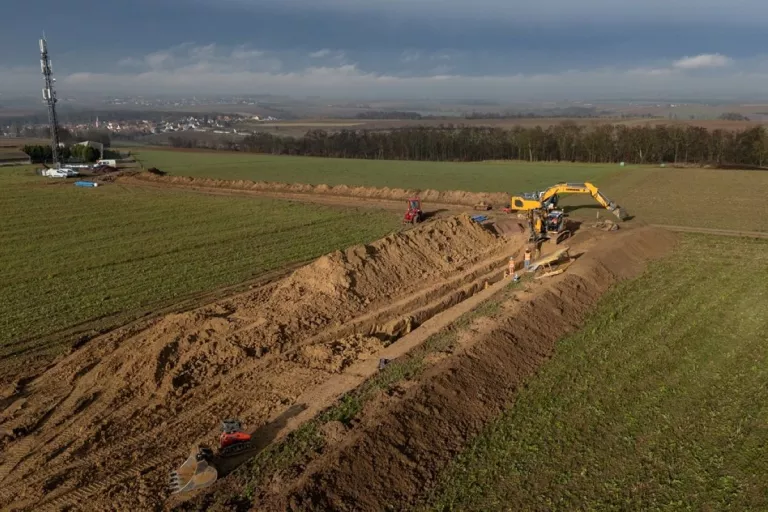
Located on Galgenberg Street, the project aimed to secure the pipeline connecting Gougenheim to the Galgenberg reservoir, a strategic link in the drinking water distribution network.
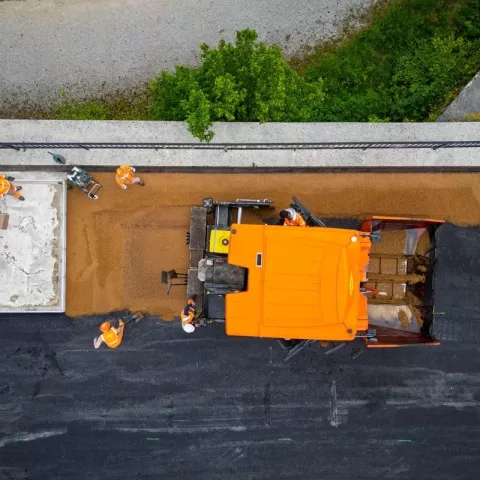
The work involved the installation of 1,800 metres of DN200 ductile iron drinking water transmission pipeline, along with the rehabilitation of existing service connections and the installation of new meter chambers. These improvements have significantly enhanced the quality and reliability of water service for local residents.
Carried out between November and February, the project was delivered under the supervision of the Alsace-Moselle Water and Sanitation Authority (SDEA).
A technically controled project ensuring network continuity
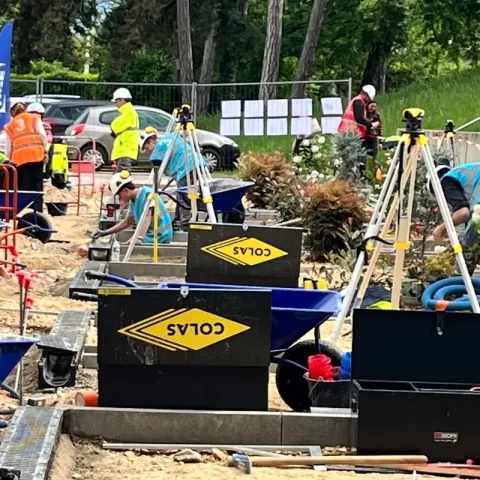
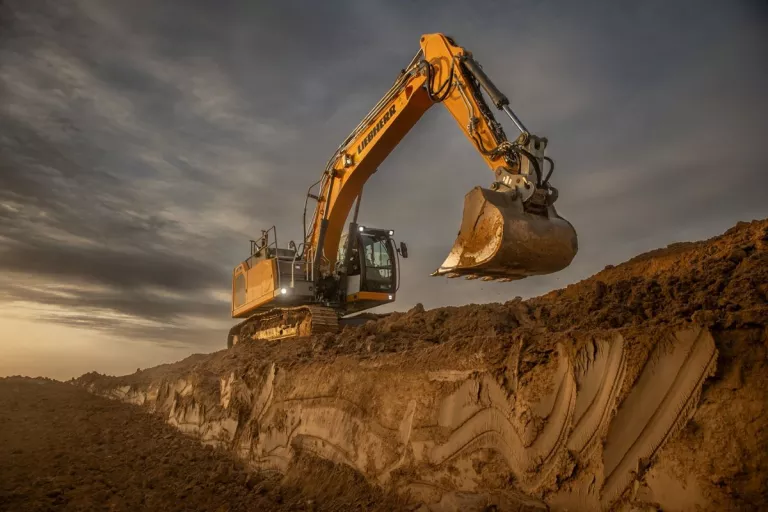
This type of work on water networks involves significant technical constraints. On this project, some areas reached depths of over 4 meters, requiring rigorous organization.
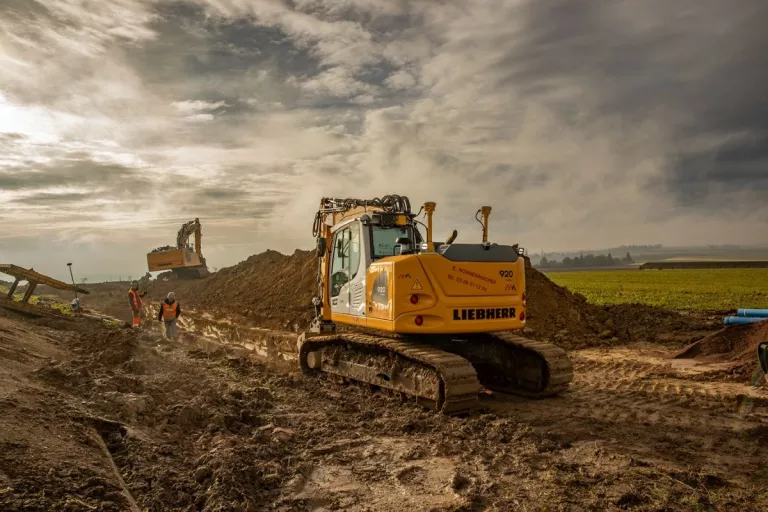
The challenge was twofold: to guarantee the safety of the teams while ensuring the continuity of drinking water service during the works.
Thanks to their expertise, the teams were able to adapt their methods of intervention to maintain water supply while ensuring optimal quality of execution.
A responsible approach to sustainable infrastructure
As part of the Group’s environmental commitment, the project incorporated practical measures to reduce its environmental footprint, including:
- reusing materials generated during the works
- Recovering and recycling construction waste
- Using recycled asphalt mixes
These practices reflect a sustainable approach that combines technical performance with environmental responsibility, helping to build more resilient and resource-efficient infrastructure for the future.
A more reliable drinking water network for local communities
The reinforcement of this intermunicipal pipeline represents a significant improvement for the region. It helps secure the drinking water supply, reduce the risk of network failures, and support the future needs of local communities.
This project highlights the essential role of these infrastructures which, although often unseen, are fundamental to everyday life.
Do you have a project relaed to drinking water networks?
Local authorities, water utilities, and public stakeholders: securing and modernizing networks is now a strategic priority.
Colas teams support you in the design, construction, and maintenance of your hydraulic infrastructure, with solutions tailored to the specific characteristics of each region.